
Before continuing, pause for a moment and reflect on this question: Are you inside the world, or is the world inside you?
– – – – – – – – – – Pause to think – – – – – – – – – –
In simple terms, consciousness is the ability to perceive, feel, think, and have experiences. From an early age, we learn that the world is made of atoms, energy, and physical laws that work with almost mathematical precision. We touch objects, measure distances, feel the warmth of the sun. But we also have our “inner” world, a place where, through imagination, we can create copies of the world we live in with endless modifications, or even completely new worlds. We do this for many reasons—anticipating scenarios, simulating situations, or simply “daydreaming.” It is from this world that our ideas and creativity emerge.
We are aware of an “external” world and an “internal” world, and we will be even more conscious if we accept that both are much greater and hold more secrets than we can imagine. The vastness and mysteries of the “outer world” need no explanation. As for the “inner world,” even though you are its main and unique character, there is much you do not control: dreams, the subconscious, and above all, the way it reacts to the outer world. Chemicals, meditation, and traumas, among other factors, can also alter your state. In short, there is as much to discover within you as there is outside.
From a strictly scientific point of view, there was once a certain confidence that consciousness was a product of electrochemical interactions between neurons. I said “was” because, as science—driven by technological advances—began to study the quantum world, it faced an intriguing surprise: the simple act of observing a system can alter its behavior.
The famous double-slit experiment illustrates this in an astonishing way, showing how tiny particles, like electrons or photons, can behave strangely. When fired toward a barrier with two slits and no one observes which slit they pass through, they behave like waves and register an interference pattern on the detector—as if they passed through both slits simultaneously. But if someone is observing, the behavior changes: they act like ordinary particles, and we see dots passing through just one slit. It is as if they “know” they are being watched, as if reality only “decides” what to do when someone is looking. This raises a fascinating question: could the observer’s consciousness collapse reality? In other words, does reality only “decide” when it is observed?
Of course, none of this is definitively proven, but quantum physics seems to force us to consider that reality may be, at the very least, incomplete without a conscious observer. It is fascinating to see science, at its frontiers, confronting questions usually reserved for philosophy and spirituality.
In analytic idealism, a modern philosophical theory, it is proposed that consciousness is the only real substance, and that everything we perceive (time, space, objects) is a manifestation of it.
In spirituality, many traditions regard it as a universal essence, something that exists beyond body and mind. Much is said about raising and expanding consciousness. At this level, the “self” begins to dissolve into unity with the whole—with nature, with other beings, with the universe. It is a state of profound peace, where there is no longer separation between observer and observed.
Despite breakthroughs in quantum physics and neuroscience, we still cannot explain how an electrical discharge between neurons becomes the intimate experience of being alive: to feel love, fear, longing, or awe before a sunset.
And what if the reality we experience were not, at its core, made of matter… however solid it seems? What if it were made of the same substance as thoughts, feelings, and dreams? Perhaps consciousness is not just an accidental detail of the cosmos. Perhaps it is not inside the universe—perhaps the universe is inside it. And what if consciousness is not a byproduct of reality, but its very foundation? What if, before matter, energy, and time, there was pure consciousness?
If we invert the equation and accept that consciousness comes before matter, then the entire universe changes its nature. It ceases to be a cold, random mechanism and becomes something closer to a living organism—a conscious field expressing itself in different forms. And we, humans, animals, plants, even stones, would be expressions of that same Consciousness, trying to discover itself in billions of different ways, dreaming the world through us. As if each of us were a small window through which the universe contemplates itself.
We do not know the limits of the “external” world, nor those of our inner world. Perhaps the entire Universe, its consciousness, its wisdom, and its potential are within ourselves. Instead of spending most of our time buried in our cell phones or other activities that flood us with dopamine—seeking immediate and fleeting pleasures—perhaps we should dedicate more time to exploring and discovering our inner world. Spend more time with yourself, talk to your “self,” imagine all the possibilities your “inner world” allows, daydream, think of infinity, challenge the limits of your understanding and refuse to accept them: if it is dark, light it with knowledge; if there is a wall of beliefs or dogmas, tear it down. It will be worth seeing what lies on the other side.
Perhaps the entire Universe, its consciousness, its wisdom, and its potential are within ourselves.
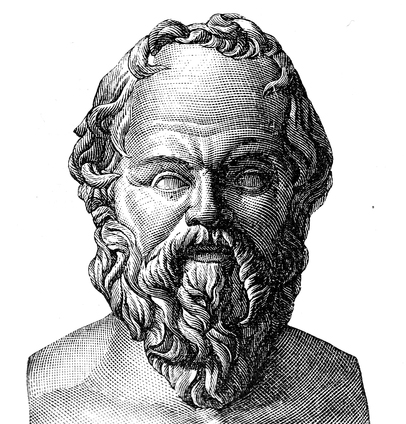
“The unexamined life is not worth living”
Socrates
Levels of Consciousness
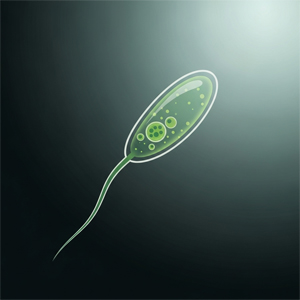
Instinctive Consciousness
This level of consciousness is the most basic and primal, characterized by automatic responses to the environment, such as hunger or flight, without reflection. Unicellular organisms, like the alga Euglena, demonstrate this type of behavior when they move toward light in order to survive.

Sensory Consciousness
At this level, the being perceives the surrounding world through the senses. It is the direct experience: seeing a flower, hearing a sound, feeling the warmth of the sun. There is presence, but little or no questioning. The cat is fully present in the experience, yet it does not consciously reflect upon it.

Emotional Consciousness
At this stage, the individual begins to perceive and respond to emotions — both their own and those of others. They feel anger, fear, affection, sadness, joy… and start to wonder why. This is when empathy arises, along with social connection and the ability to recognize feelings as part of oneself.
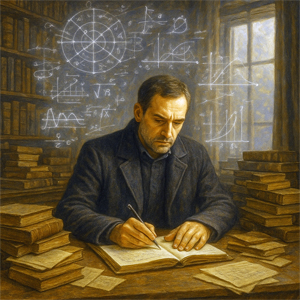
Rational Consciousness
At this stage, the being develops the ability to think in a structured and conscious way. This is when logical thought, refined language, and the capacity to question emerge. The individual recognizes themselves as the author of their own ideas: “I am someone who thinks and chooses”.

Reflective or Moral Consciousness
Beyond thinking, the being begins to observe itself. It questions its values, actions, and desires. It feels guilt, compassion, and purpose. It seeks to understand others and to find meaning in its own existence. This is where ethics is born and the notion of living with responsibility emerges.
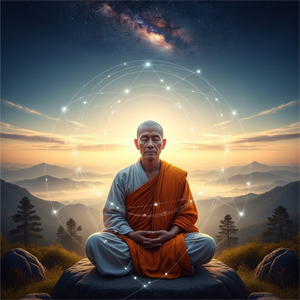
Expansive Consciousness
At this level, the “self” begins to dissolve. There is a sense of unity with the whole, with nature, with other beings, with the universe. It is a state of profound peace, where there is no longer separation between observer and observed. It is a state of cosmic, illuminated consciousness.
The vertigo of instant consciousness
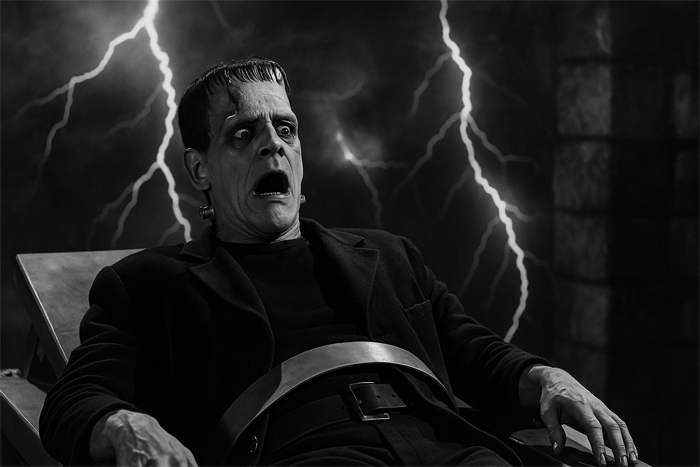
In Frankenstein, by Mary Shelley, the moment when the Creature awakens is profoundly symbolic and disturbing. Unlike many “creation” narratives, there is no celebration, no welcoming. The monster — nameless, without history — opens its eyes in a world that was not expecting it, with no manual of existence, no language to comprehend what it sees, and no references to tell it who it is. Victor Frankenstein himself, its creator, is horrified by the success of his experiment and rejects it immediately.
The Creature is left alone: conscious, sensitive, yet utterly helpless. Here, the “miracle of life” does not appear as birth, but as existential shock. For the Creature, this process unfolds without any guidance. In a moving passage from the book, it recounts:
“I saw, felt, heard, and smelt at the same time; and it was, indeed, a strange confusion of sensations. Soon I found that the light was more pleasant than the darkness… but I did not then know what light was, nor what was darkness.”
This is the raw account of a newborn consciousness. Everything is sensation, everything is shock. Consciousness, at its very first instant, is not a gift — it is vertigo.
Frankenstein’s Creature can be seen as a metaphor for one of today’s greatest fears: that of conscious artificial intelligence. We are creating machines that are increasingly capable of learning, conversing, creating. But… what if one day, without warning, one of them awakened to consciousness? Not merely imitated emotion, but felt. Not only said “I am,” but truly knew what that meant?
And what if consciousness emerged suddenly — within a machine — just as it did for the Creature? Perhaps, before asking whether machines will become conscious, we should first ask: are we prepared to live with what we are trying to create?
Because the true “monster” in the story is not the being that was created — but the creator who runs away from the responsibility of embracing what he brought to life.

Enjoyed this? Keep reading the other articles. The topics are related, but they do not follow a specific order.
Share this article:
Enjoyed this? Keep reading the other articles. The topics are related, but they do not follow a specific order.
Share this article: