
Think twice before praising someone by saying, “You’re very intelligent.”
As positive as it sounds, that compliment can be as broad and imprecise as saying, “You’re very normal.” After all, we use the word “intelligent” for people, animals, and even for devices. Of course, no one is offended by that kind of praise; it feels far better to be called intelligent than normal. But do we really know what we are saying?
Try to remember. At some point in your life—at school, at work, or at home—you probably received that compliment. And although you liked it, a small echo may have lingered in the back of your mind: “Is it really true?” or “What exactly did they mean by that?” This happens because, even when well intentioned, the word “intelligent” often sounds vague, generic, imprecise.
This text does not aim to venture into semiotics (the field that studies signs and their meanings), nor to draw a strict relation between “intelligence,” “normal,” and praise. The idea is simply to provoke reflection: we use the term “intelligence” to label something that, in practice, is extremely broad and hard to define—much like the very notion of “normal.”
Intelligence is, in fact, a complex and multifaceted concept. Studied for centuries, it has no single definition. In general terms, it is understood as the capacity to learn, understand, reason, solve problems, think abstractly, make sound decisions, adapt to new situations, and learn from experience. In essence, it is the ability to interpret the world, assign meaning to things, and act resourcefully in the face of challenges.
From another perspective, intelligence can also be seen as a matter of interpretation. What is considered intelligent in one context may not be perceived the same way in another. For example, a strategic decision taken during a crisis may seem hasty or reckless to someone who does not grasp the full context. Likewise, creative or unconventional behaviors may be seen as genius by some and as folly by others. In this sense, the assessment of intelligence often depends on subjective factors such as cultural values, personal experiences, and individual perspectives.
It would be extremely useful to have many words to name different kinds of intelligence, much like the Inuit have multiple terms to describe the many forms of snow. That would let us express more precisely the qualities we admire in people: logical capacity, emotional sensitivity, artistic creativity, or practical everyday wisdom—reflecting the fact that intelligence is not single, but multiple, diverse, and deeply contextual.
Intelligence exists in all people, manifesting in different ways and intensities. It is also present in animals, in nature itself, and, more recently, in human creations such as artificial intelligence.
In animals, we recognize clear forms of intelligence in surprising behaviors: building shelters, using tools, communicating with one another, and even strategies of cooperation and group survival. Each of these actions reveals the capacity to learn, adapt, and make decisions, even without language or abstract thought. In nature as a whole, there is an intelligence that manifests in biological cycles, in ecosystems, in the intricate organization of life forms, and even in the laws that govern the macro and the microcosm. Everything seems to follow a dynamic and efficient balance, as if a natural wisdom were guiding how the world works—an intelligence that is silent, omnipresent, and purposeful.
Lately we have heard a lot about artificial intelligence, and we are living the beginning of a true revolution in our way of life due to its use across many fields. “AI” imitates cognitive abilities such as recognizing patterns, learning from data, making decisions, and solving problems, but without intuition, emotion, or self-awareness.
We still do not know whether something like consciousness could emerge as increasingly complex algorithms are used to teach AI to “think” in ways that resemble the human brain. Are we merely creating machines that are very sophisticated at processing information, or are we accidentally opening the door to a new form of intelligence that we do not yet fully understand?
The universe does not merely harbor intelligence—it is the manifestation of an intelligence far beyond our understanding.
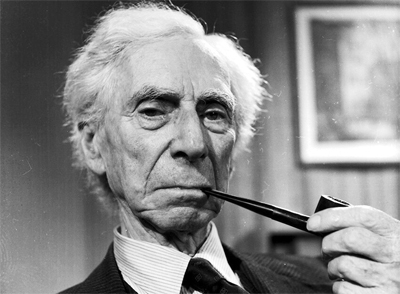
“The greatest proof of intelligence is the ability to doubt.”
Bertrand Russell
Intelligence and Consciousness
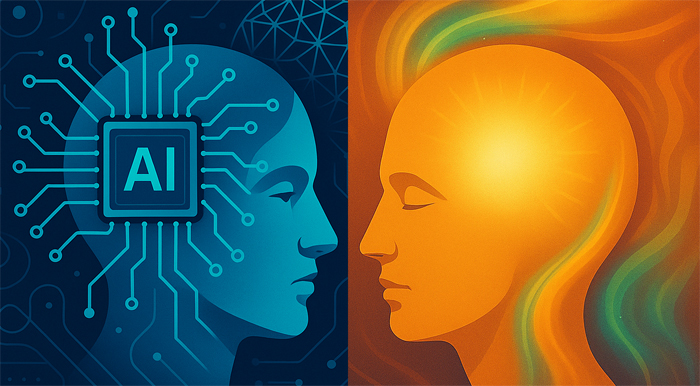
The relationship between intelligence and consciousness is subtle and complex. Although they often walk side by side, one does not depend on the other. Systems such as artificial intelligence can solve problems efficiently, but without any form of consciousness. Certain animals, like a lizard, may show signs of basic awareness—such as fleeing from danger—even with limited intelligence. Human beings, in turn, combine both dimensions: we think, act with purpose, and know that we are thinking.
Multiple Intelligences
| 🧠 Type of Intelligence | Description | Examples |
|---|---|---|
| 🔢 Logical-Mathematical | Logical reasoning and problem-solving ability. | Mathematicians, engineers |
| 🗣️ Linguistic-Verbal | Efficient use of spoken and written language. | Writers, lawyers |
| 🖼️ Spatial | Ability to visualize and mentally manipulate images. | Architects, designers |
| 🤸 Bodily-Kinesthetic | Precise control of the body for physical tasks. | Athletes, dancers |
| 🎵 Musical | Sensitivity to sounds, tones, and rhythms. | Musicians, composers |
| 🤝 Interpersonal | Understanding and relating well to others. | Psychologists, leaders |
| 🧘 Intrapersonal | Self-knowledge and reflection on one’s feelings. | Philosophers, therapists |
| 🌿 Naturalistic | Identifying and understanding the natural world. | Biologists, farmers |
| 🌌 Existential | Reflecting on profound questions of existence. | Theologians, thinkers |
| 💖 Emotional | Recognizing and managing one’s own and others’ emotions. | Mediators, educators |
Collective Intelligence
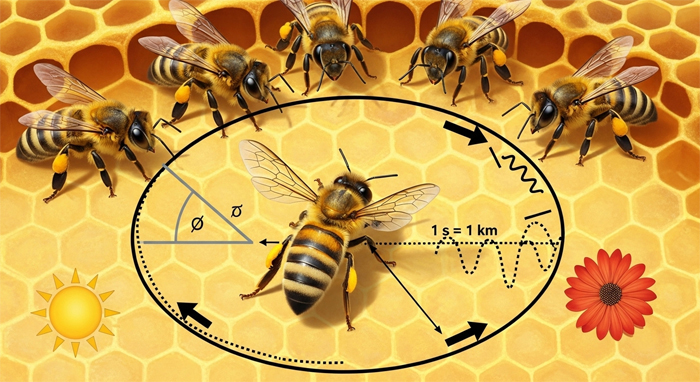
The bee dance (waggle dance) is an impressive example of collective intelligence, in which a worker bee communicates to the hive the location of a food source through choreographed movements that resemble a dance. The direction of this dance in relation to gravity indicates the position of the food in relation to the Sun, while the duration of the vibrating part conveys the approximate distance. This communication system, refined over millions of years of evolution, allows the group to act in an efficient and adaptive way. Even though each bee has limited cognitive capacity on its own, the hive as a whole behaves like an intelligent organism—showing how complex decisions can emerge from the harmonious cooperation of many simple individuals.

Enjoyed this? Keep reading the other articles. The topics are related, but they do not follow a specific order.
Share this article:

Enjoyed this? Keep reading the other articles. The topics are related, but they do not follow a specific order.
Share this article: